Have you ever experienced this?
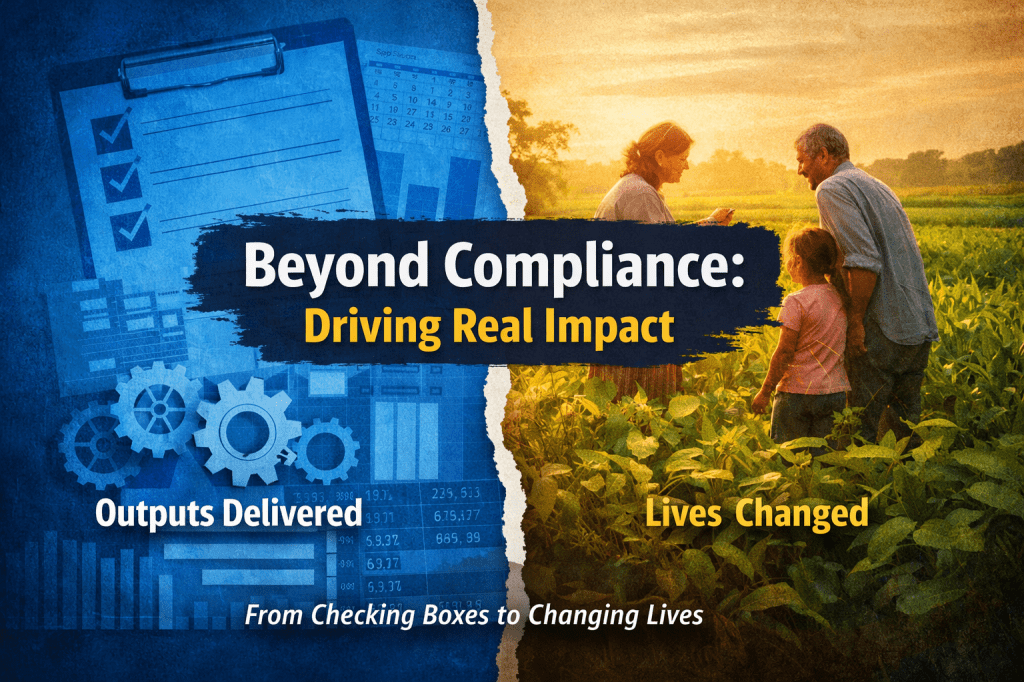
Outputs delivered might work well when we talk about products and business. It does not , when we talk about human beings. An initiative can be perfectly implemented—and still miss the point.
In many development settings, the focus naturally shifts to what is visible and reportable: activities completed, people reached, plans delivered. These are important. They show structure, effort, and commitment.
But they don’t tell us whether anything actually changed.
Because change doesn’t sit in outputs. It shows up in people’s realities—often in ways that are harder to predict, measure, or control.
And that’s where the real work begins.
When systems lean too heavily on what can be counted, we risk optimizing for delivery instead of impact. Step by step, meaningful work can turn into well-executed checklists.
Compliance matters—it creates reliability, transparency, and trust.
But for us at the Sustainable collaboration network Kenya (SCN Kenya), accountability means something deeper:
being willing to look at what didn’t work, to understand why, and to adapt accordingly.
Not:
“We delivered as planned.”
But:
“The approach didn’t lead to the change we hoped for. Here’s what we’re learning, and here’s what we’re doing differently.”
When we see during the implementation that there are better options than planned we go for it.
That shift—from reporting to learning, from outputs to lived outcomes—is where systemic change starts.
Because in the end, it’s not about what we deliver according to our strategic planning.
It’s about whether it makes a difference.
 Go Kenya, go future!